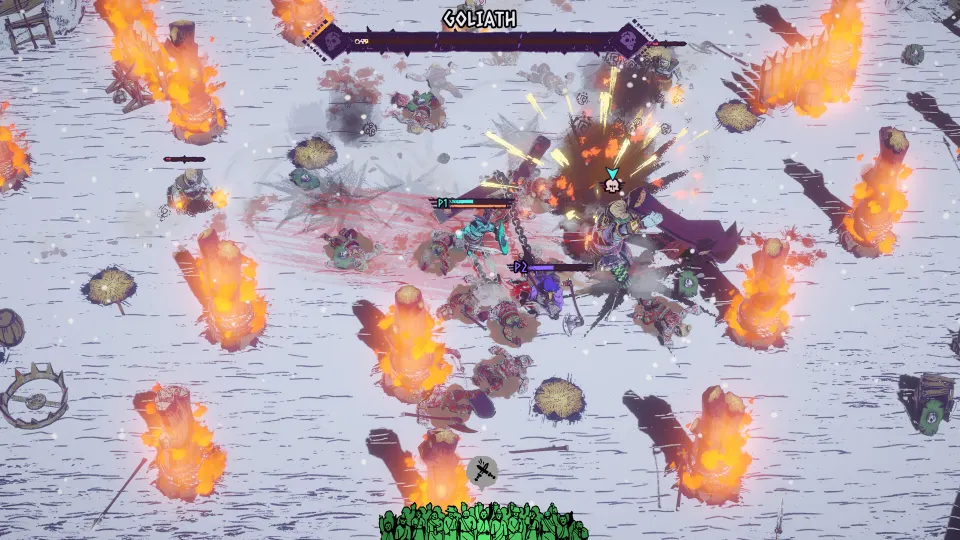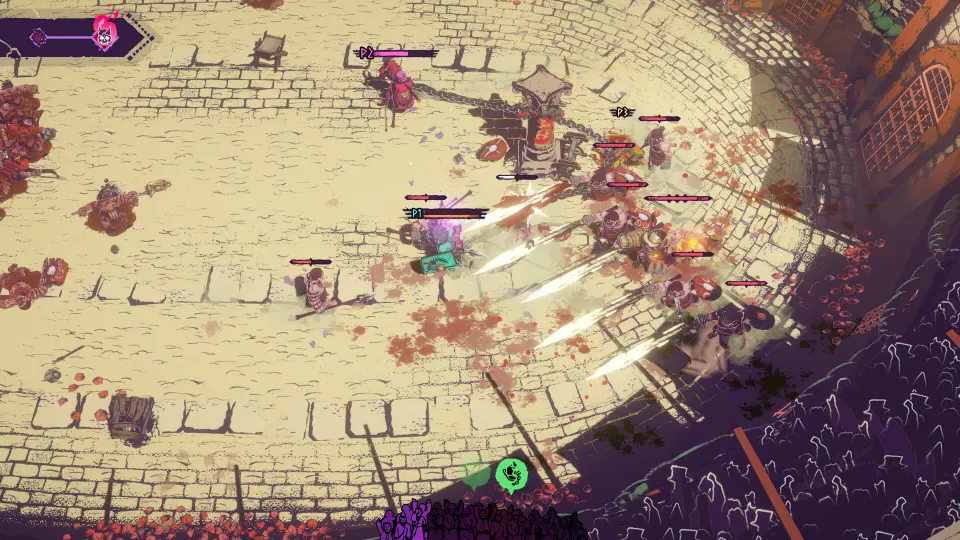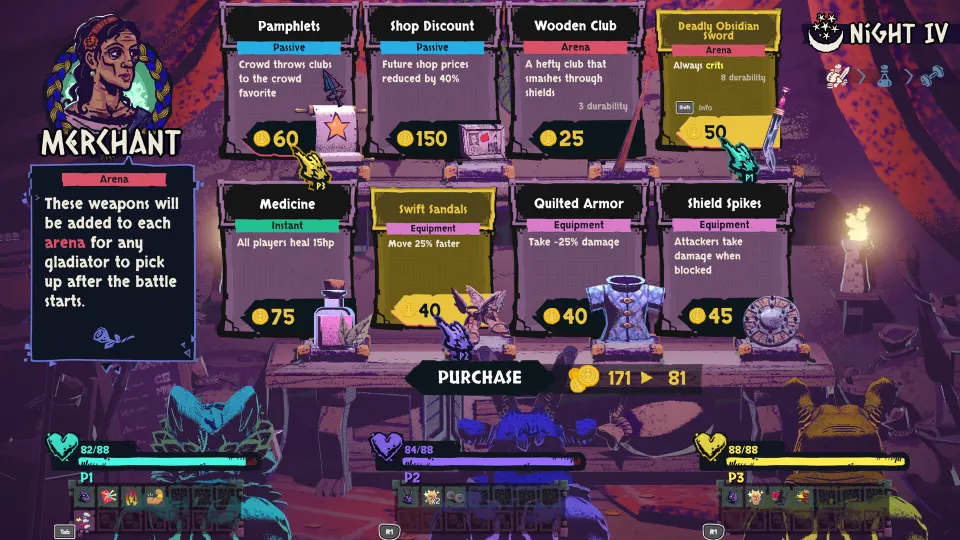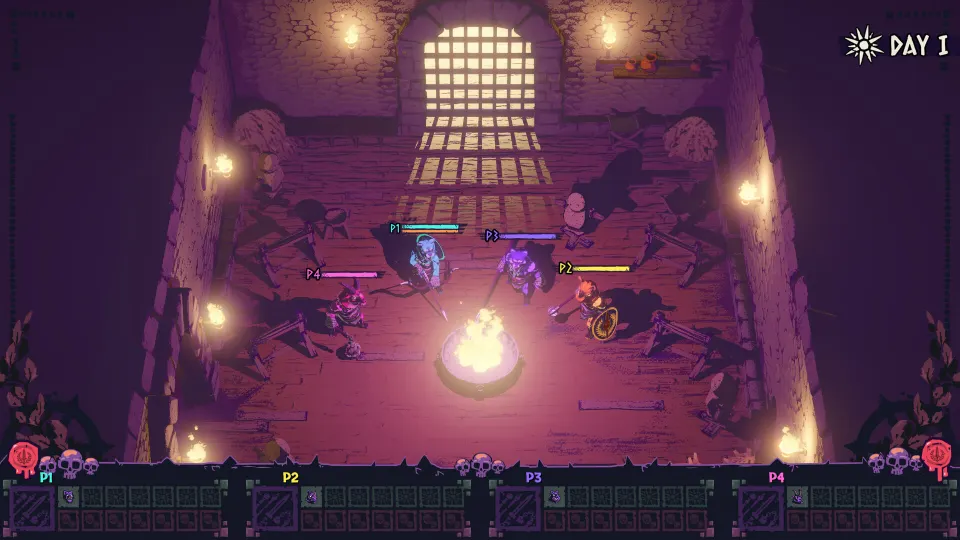
Character roster overview
The character you choose changes how you approach every arena fight, from surviving early waves to taking advantage of the crowd. While Chained Beasts emphasizes shared weapons, skills, and chain teamwork, each animal fighter brings distinct traits and available variants.
The currently known playable animal roster includes a lion, wolf, monkey, and eagle. These are gladiators rather than enemy creatures, and they can be used in solo play or in a chained group of up to four players.
| Character | Confirmed role details | Best fit |
|---|---|---|
| Lion | A known playable animal fighter with character-specific traits | Players who want to experiment with a direct combat-focused fighter |
| Wolf | Has multiple variants, including the Bone Collector Wolf | Players interested in rewards tied to combat actions |
| Monkey | A known playable animal fighter with its own traits | Players who value flexible team composition |
| Eagle | A known playable animal fighter with its own traits | Players looking to vary their group’s abilities |
Not every character ability, starting stat, or unlock requirement has been publicly detailed. The safest way to think about the roster is that animal choice establishes your personal traits, while the weapons, upgrades, afflictions, and team coordination determine the rest of a run.
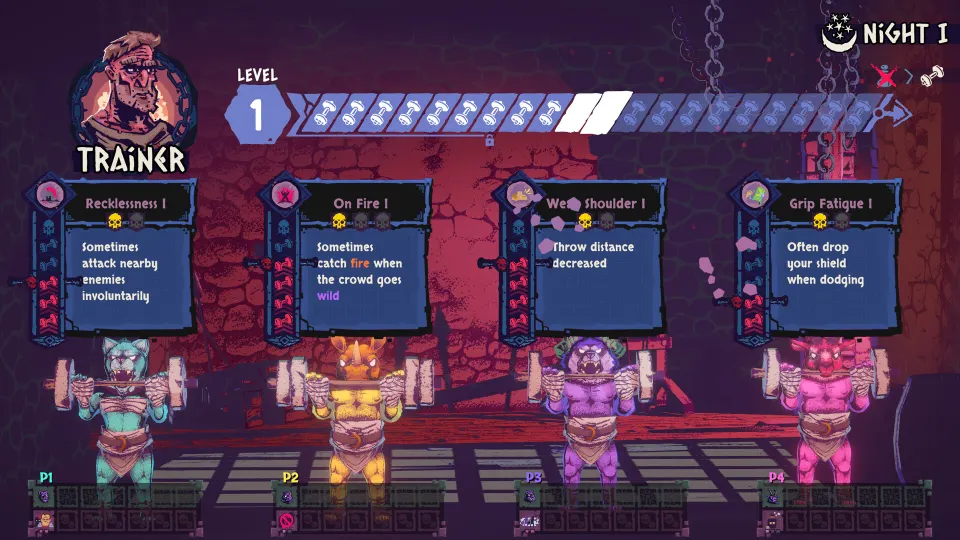
Known variants and character traits
The roster is not limited to one fixed version of each animal. Characters can have variants that alter their strengths and encourage a different strategy. The clearest confirmed example is the Bone Collector Wolf.
Bone Collector Wolf gains extra value from dismemberment. Picking up severed enemy body parts earns money, making the character especially useful for players who can consistently finish enemies with attacks that cause dismemberment. That money can then support purchases of weapons and equipment between arena encounters.
| Variant or system | Confirmed effect | Practical takeaway |
|---|---|---|
| Bone Collector Wolf | Has increased dismemberment potential and is paid for collecting body parts | Prioritize finishing blows and collect remains after combat |
| Character traits | Each animal has its own traits | Read your trait before selecting upgrades or planning a weapon style |
| Unlockable characters | New characters with powerful abilities can be unlocked | Keep progressing through runs to expand your choices |
| Perks and skills | Characters can gain powerful skills during a run | Build around the perks offered instead of forcing one preset plan |
Traits should influence choices, but they should not trap you into a single weapon. A wolf variant that benefits from dismemberment may still need a shield when the arena is packed with attackers. Likewise, a fighter built for melee can benefit from throwing a weapon when an enemy is beyond chain range.
The best character setup depends on the group. If one player has a trait that rewards tripping foes, teammates can deliberately use the chain to knock enemies down. If another character benefits from weapon throws, the group can weaken targets and leave finishing opportunities open.
Building a gladiator during a run
Characters become stronger through a mix of perks, weapons, equipment, crowd favor, and careful risk management. There is no guaranteed build order because each roguelike run presents different upgrades, injuries, shops, and challenges.
After fights, players may choose recovery options. Healing can come with serious drawbacks, including vision problems, hallucinations, or other afflictions. Potions can keep a fighter alive, but the cost may fundamentally change how that character handles the next arena.
| Build element | What it changes | Character decision |
|---|---|---|
| Weapons | Determines attack range, damage, and throwing options | Pick a weapon that covers your current weakness |
| Shields | Help block attacks but can break | Useful for fragile or injured fighters |
| Perks | Add combat bonuses and unusual effects | Choose effects that support your trait or team plan |
| Equipment | Can improve performance between battles | Spend earned money on the most immediate need |
| Afflictions | Add lasting physical or mental drawbacks | Adapt your build instead of ignoring the penalty |
| Crowd favor | Rewards varied and dramatic combat | Use executions, throws, and arena hazards creatively |
A useful early-run process is:
- Check the character trait and identify what actions it rewards.
- Take a weapon that gives you a reliable answer to nearby enemies.
- Use the arena itself: spikes, pits, urns, and throwable objects can save health.
- Coordinate chain movement before pursuing separate targets.
- Select perks that improve your strongest repeatable action.
- Treat healing penalties as build-defining conditions, not minor inconveniences.
For example, a character struggling with low health may take a healing option that causes hallucinations. That fighter should then play more cautiously, test uncertain targets before committing, and let teammates help control crowds. A stronger character with a defensive shield might instead create space, block attacks, and protect the injured teammate.
Training and level-up choices also matter. Some effects improve movement, vigor, damage, weapon interactions, or critical-hit potential. A build can become very specialized when perks reinforce one another, but a balanced setup is often safer when the team has not yet found dependable weapons.
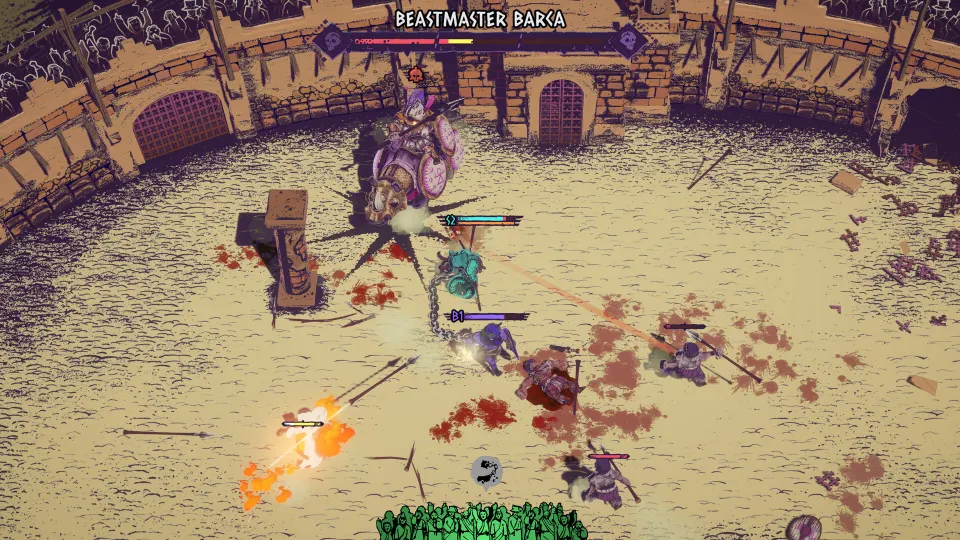
Team roles, chains, and combat choices
Characters are chained together in co-op, and that restriction is the center of the game’s strategy. The chain can pull teammates out of position, wrap around pillars, and turn a simple attack into a chaotic mistake. It can also trip enemies and create openings for executions or concentrated damage.
A group does not need formal tank, damage, and support classes. Instead, players should create temporary roles based on their current health, traits, perks, and weapons.
| Team role | What the player does | Helpful character or build qualities |
|---|---|---|
| Frontliner | Holds enemy attention and fights at close range | Shield access, strong melee weapon, reliable blocking |
| Finisher | Eliminates weakened or tripped targets | High damage, execution opportunities, dismemberment rewards |
| Thrower | Uses weapons and objects at range | Clear throwing lanes and backup melee options |
| Controller | Uses chain positioning to trip or separate enemies | Good movement, awareness of teammates, crowd-control perks |
| Scavenger | Collects money, weapons, and useful remains | Mobility and rewards linked to pickups, such as Bone Collector Wolf |
Communication becomes more important as the group grows. Four players can create powerful chain traps, but they can also stop one another from reaching an enemy or accidentally drag allies toward hazards. Call out movement before circling a pillar or charging toward a target.
When enemies are clustered, do not all chase the same foe. Spread around the shared chain’s limits, then pull opponents into a favorable position. A tripped enemy is vulnerable, while a chain tangled around arena geometry gives enemies time to attack.
Boss fights demand the same discipline. Bosses are arena heroes with substantial advantages, and fame leads the group toward more dangerous opponents. Preserve weapons, avoid unnecessary injuries, and keep enough space for every chained player to move. A character with a powerful personal trait is valuable, but coordinated survival is usually more valuable.
FAQ
How many playable characters are in Chained Beasts?
The known animal roster includes the lion, wolf, monkey, and eagle. Additional unlockable characters are part of the progression system, but a complete official roster and every unlock condition have not been publicly confirmed.
What is the best character in Chained Beasts?
There is no confirmed universal best character. The best choice depends on your trait, available variant, weapons, perks, injuries, and whether you are playing alone or with a coordinated group.
What does Bone Collector Wolf do?
Bone Collector Wolf is a wolf variant that benefits from dismemberment and earns money by picking up enemy body parts. It is a strong choice if you can reliably create and safely collect those drops.
Are all characters different in combat?
Yes. The animals have their own traits, and variants can further change how they play. However, every fighter also relies heavily on shared systems such as weapons, perks, arena hazards, crowd favor, and chain coordination.
Can chained beasts all characters use the same weapons?
Characters can use arena weapons and throwable objects, so weapon access is not limited to one animal. Your character trait and current upgrades determine which available weapon is most effective for your build.