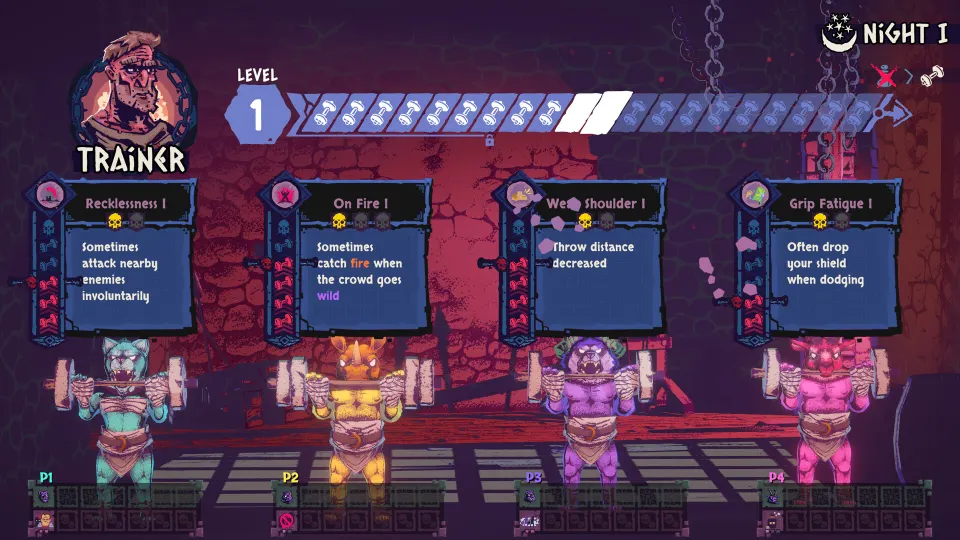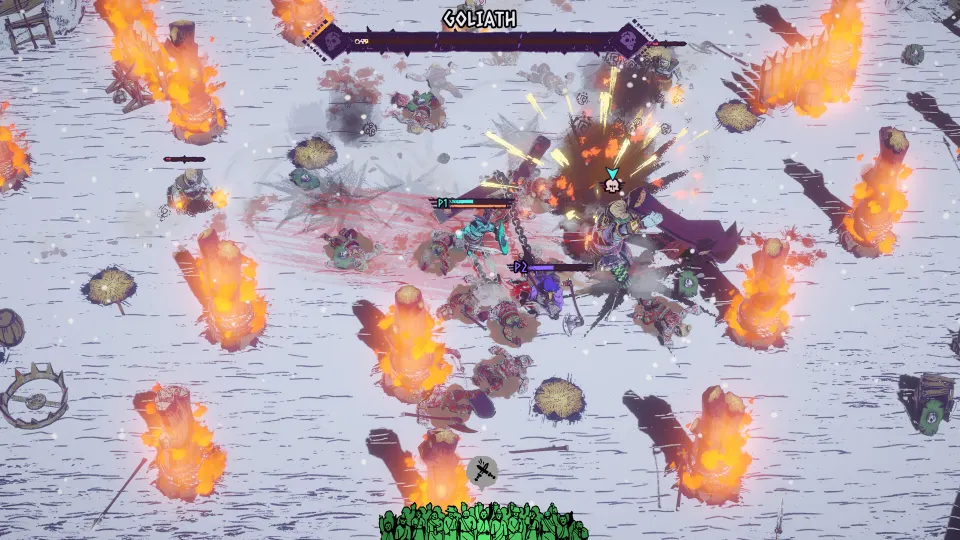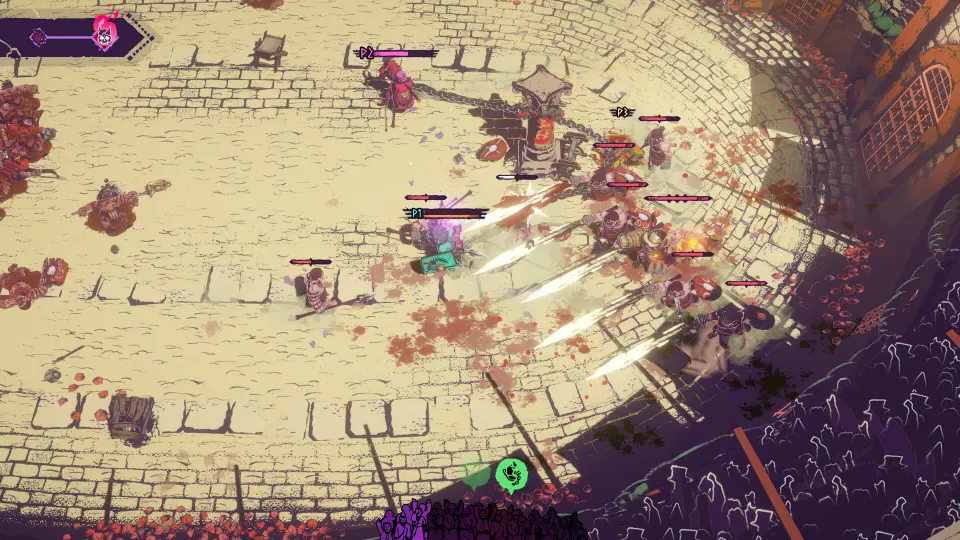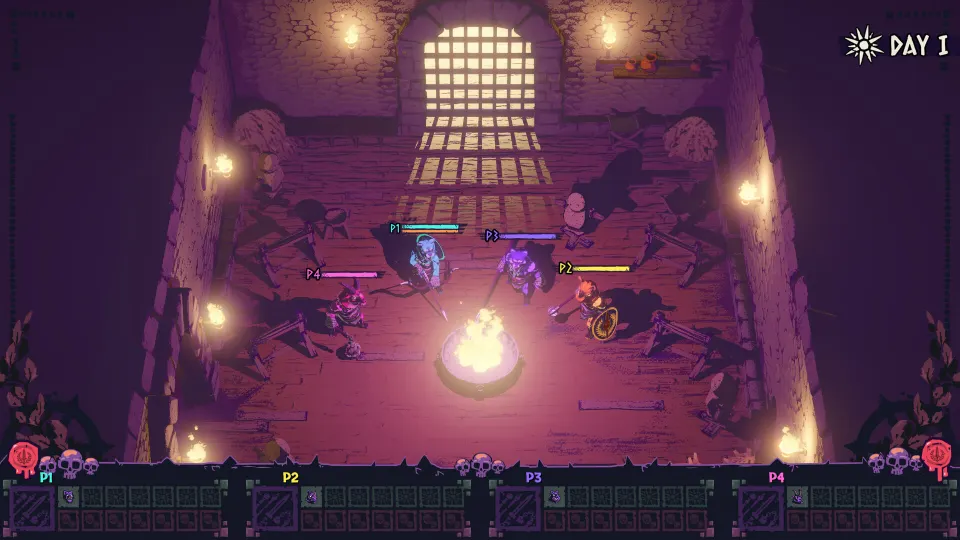
Why Multiplayer Changes the Arena
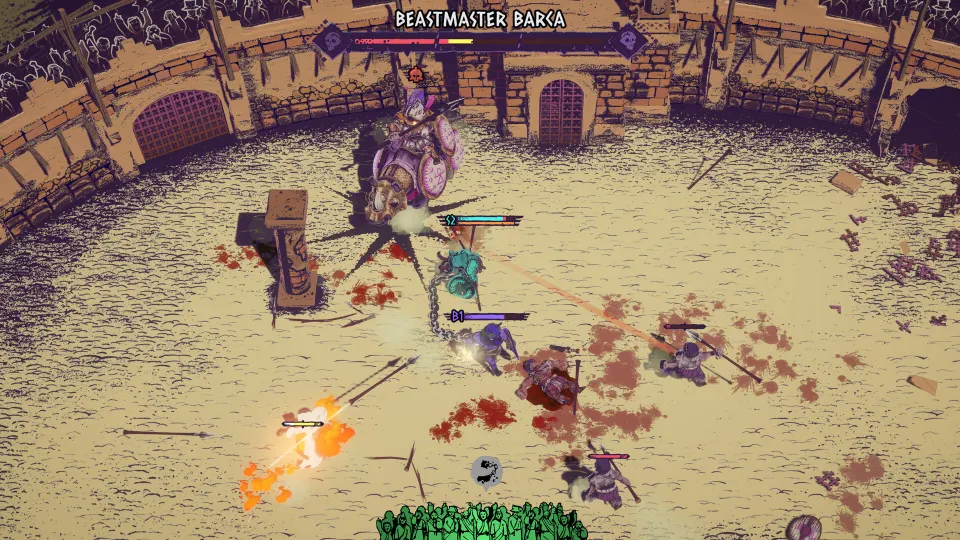
Chained Beasts multiplayer is built around a simple problem: your team is physically chained together, so nobody can fight without affecting everyone else. The result is a co-op gladiator roguelike where positioning, timing, and recovery matter as much as dealing damage.
Up to four players can enter the arena together. A successful group does not need perfect execution, but it does need to recognize when the chain is a liability and when it can become a weapon. Pulling in opposite directions, circling obstacles carelessly, or chasing separate targets can leave everyone exposed. Coordinated movement can instead trip enemies, create openings, and keep injured allies alive.
| Multiplayer feature | What it means in play | Why it matters |
|---|---|---|
| Team size | 1-4 players | Supports solo runs, pairs, trios, and full groups |
| Online co-op | Players can join remotely | Lets friends form an arena crew without sharing a screen |
| Local co-op | Shared or split-screen options are supported | Useful for couch sessions and Remote Play Together |
| Cross-platform multiplayer | Listed as a game feature | Expands potential co-op options across supported platforms |
| Chain system | Teammates are tethered during combat | Makes movement and target selection a group decision |
The game also supports single-player, but its design is primarily aimed at co-op. Solo play is generally slower and more deliberate because one player must handle every weapon, threat, and decision. A four-player run is louder, faster, and more unpredictable, with the chain creating both slapstick failures and powerful coordinated plays.
Building a Better Co-op Team
The best teams treat the chain as shared space rather than an annoyance. If one player runs ahead while another retreats, the group loses control. Before a wave becomes chaotic, decide where the team should stand, which direction it should rotate, and who is responsible for high-priority threats.
A useful approach is to assign loose roles based on current equipment rather than forcing permanent character classes. One gladiator may have a shield and hold attention, while another throws weapons from range. A player with a heavy melee weapon can capitalize on enemies knocked down by the chain.
| Team role | Useful equipment or focus | Main responsibility |
|---|---|---|
| Frontliner | Shield, sword, mace | Block attacks and occupy dangerous enemies |
| Finisher | Heavy melee weapon, flail | Punish stunned, tripped, or cornered enemies |
| Thrower | Spears, pots, spare weapons | Damage distant foes and complete throw-based tasks |
| Support mover | Fast weapon or open hands | Help steer chain position and retrieve supplies |
Use these habits to keep a run organized:
- Move as a group before engaging a new cluster of enemies.
- Call out when the chain is wrapping around a pillar or wall.
- Avoid splitting toward opposite sides of the arena.
- Soften enemies before a teammate attempts a specific challenge kill.
- Leave room for allies using slow, heavy weapons.
- Watch who is low on health before choosing the next risk.
Friendly fire concerns also change positioning. When several players crowd the same target, attacks can become hard to place. It is often safer for teammates to cover adjacent enemies, then converge once a foe is tripped, stunned, or isolated.
Using Chains, Arenas, and Weapons
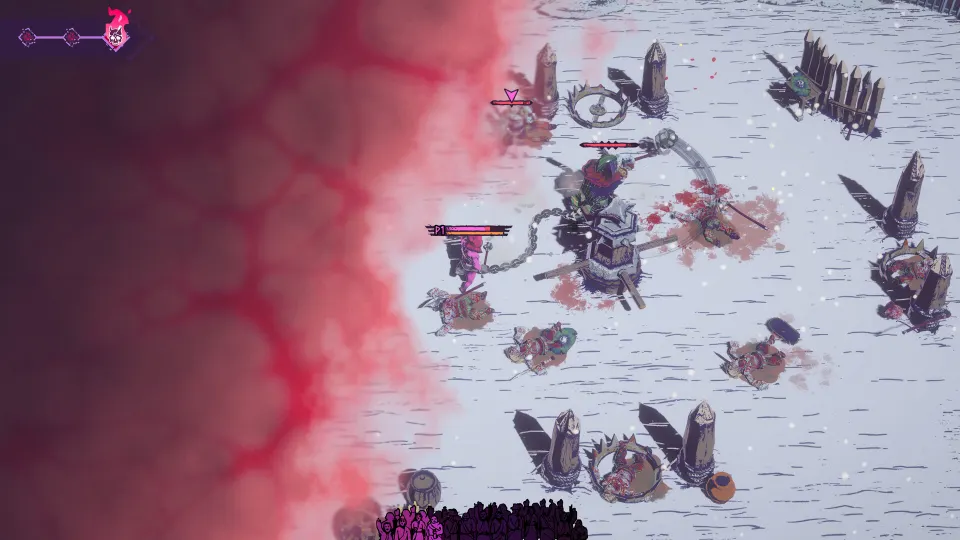
The chain is not only a movement restriction. A team can stretch it across an enemy’s path to knock that enemy down, then use the opening for a heavy attack, execution, or weapon throw. This requires spacing: players need enough distance to make the chain meaningful, but not so much that an enemy can pull the group apart.
Arena hazards make coordinated movement even more valuable. Enemies can be thrown into environmental dangers, pushed into spikes, or forced into hazardous areas. Objects around the arena can also become weapons. An urn is not merely scenery when it can be thrown at an opponent, and a dropped weapon can solve a range problem when the group cannot safely approach.
| Combat option | Co-op use | Common risk |
|---|---|---|
| Chain trip | Sweep or tighten the chain across an enemy | Players pull against one another and lose formation |
| Throwing weapons | Hit distant or weakened targets | Running out of a useful weapon at the wrong time |
| Environmental attacks | Push or throw enemies into hazards | Accidentally leading teammates into the same hazard |
| Blocking | Create safe openings and interrupt pressure | Shield durability can run out |
| Executions | Earn crowd excitement and remove threats | Standing still while the group is under pressure |
Crowd favor is another team-wide consideration. Spectacular kills, varied weapons, and aggressive arena play can win over the audience. A favorable crowd can provide meaningful support, so players should not ignore opportunities for stylish finishes just because a basic attack is safer.
That said, surviving comes first. A group should not drag an injured teammate through enemies just to reach a weapon or chase a crowd-favor opportunity. If the chain has become tangled, reset the formation first. A few seconds spent untangling can prevent an entire run from collapsing.
Surviving Injuries and Roguelike Progression
Each arena day can leave gladiators with physical or mental afflictions. Injuries are not just visual flavor; they can change how a player sees, moves, fights, or responds to danger. Healing choices may involve potions with unwanted side effects, making recovery a tactical decision instead of an automatic reset.
In multiplayer, injury awareness is especially important. A teammate with impaired vision, reduced mobility, or a difficult affliction may need the rest of the group to take more control over movement. Communicate what changed after recovery choices so the team understands why someone is hesitating, missing attacks, or avoiding a certain weapon.
Between fights, players can gain skills, buy equipment, pursue objectives, and unlock different characters with distinct abilities. Each run asks the group to adapt to available rewards rather than repeat one fixed build. That roguelike structure keeps a familiar crew from solving every arena in exactly the same way.
| Between-battle choice | Potential benefit | Multiplayer consideration |
|---|---|---|
| Healing item | Restores health | The downside may create problems for the entire chain |
| Skill selection | Improves a player’s combat options | Choose effects that fit the team’s weapons and tactics |
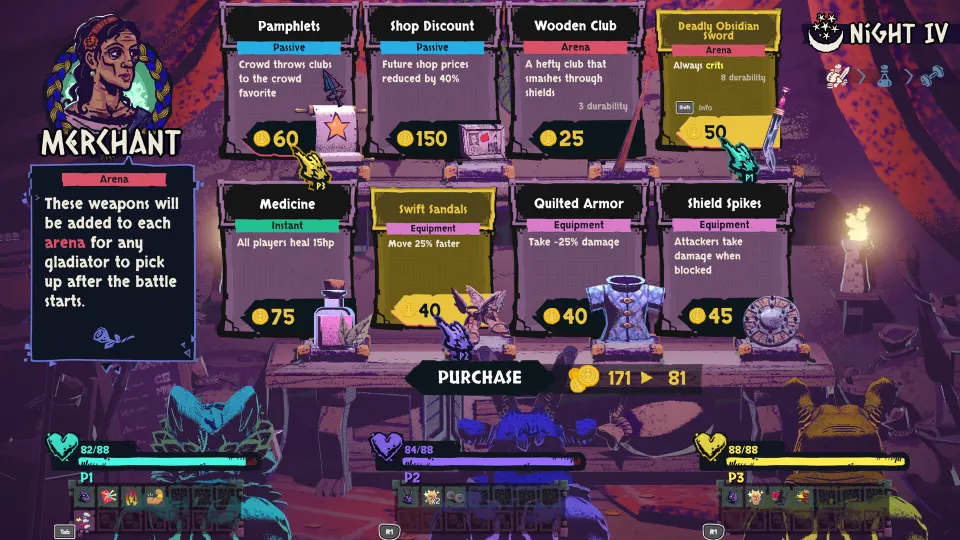
| Equipment purchase | Adds protection or offense | Cover weaknesses the current group already has |
| Optional task | Pays rewards for specific kills | Let one player focus while others prepare targets |
| Character unlocks | Opens new abilities and playstyles | Encourages different group compositions on later runs |
Bosses raise the coordination requirement further. These arena champions bring more health, pressure, and dangerous attack patterns than regular waves. A team should save space to dodge, avoid tangling around arena structures, and keep at least one player ready to retrieve dropped gear. The goal is not to make every player attack constantly; sometimes the right choice is to reposition the entire chain.
The full journey spans three arena chapters: Carthage, Germania, and Rome. Progressing through them means facing escalating enemies and bosses while managing the lasting consequences of each run. Failure is part of the roguelike loop, but teams improve quickly when they identify whether a loss came from poor movement, risky healing, weak equipment, or a chain mistake.
FAQ
Is Chained Beasts multiplayer online?
Yes. Chained Beasts includes online co-op for up to four players. It also lists local shared or split-screen co-op, cross-platform multiplayer, and Remote Play Together support.
How many players can play together?
A run supports one to four players. One player can tackle the arena alone, but co-op is the central experience because teammates share the chain and must coordinate movement.
Can friends use the chain against enemies?
Yes. Teams can use chain positioning to trip enemies and create vulnerable openings. It takes communication, since poor positioning can also tangle the group around obstacles or pull allies into danger.
Is Chained Beasts multiplayer only?
No. The game can be played solo, but it was designed primarily as a co-op gladiator roguelike. Solo runs are more controlled and strategic, while full groups create faster, messier arena battles.
What should a new team focus on first?
Start with movement discipline. Stay on the same side of obstacles, avoid chasing separate targets, learn how far the chain can stretch, and use simple weapon roles before attempting complicated crowd-favor setups or optional challenges.