Start Your Carthage Arena Run
The Chained Beasts demo is built around surviving five escalating arena battles, not simply defeating every enemy as quickly as possible. You need to fight well enough to stay alive, entertain the crowd, and manage the consequences of injuries between matches.
You can play alone, but the demo is designed around one to four gladiators in local or online co-op. In multiplayer, your group is physically connected by chains, making positioning as important as weapon skill.
The opening tutorial teaches combat basics while your gladiator attempts to escape a Roman prison camp. Treat it as practice rather than a throwaway introduction: it establishes the habits that matter once the arena becomes crowded.
| Demo milestone | What happens | Why it matters |
|---|---|---|
| Tutorial | Learn basic combat during the prison escape | Lets you test movement, attacks, weapons, and arena interaction |
| Carthage battles | Survive five arena days | Each battle adds pressure, upgrades, injuries, and tougher enemies |
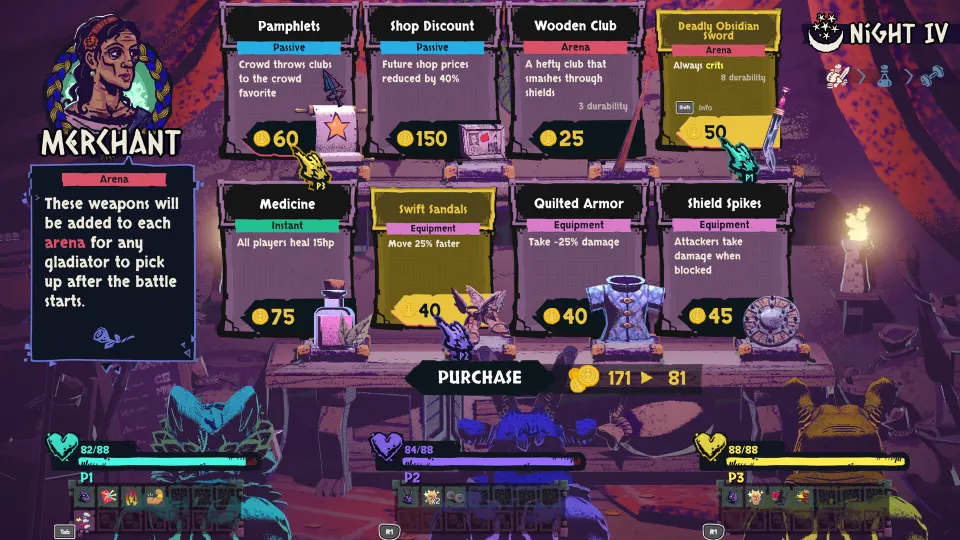
| Between battles | Choose healing, skills, gear, and other options | Your choices shape the rest of the run |
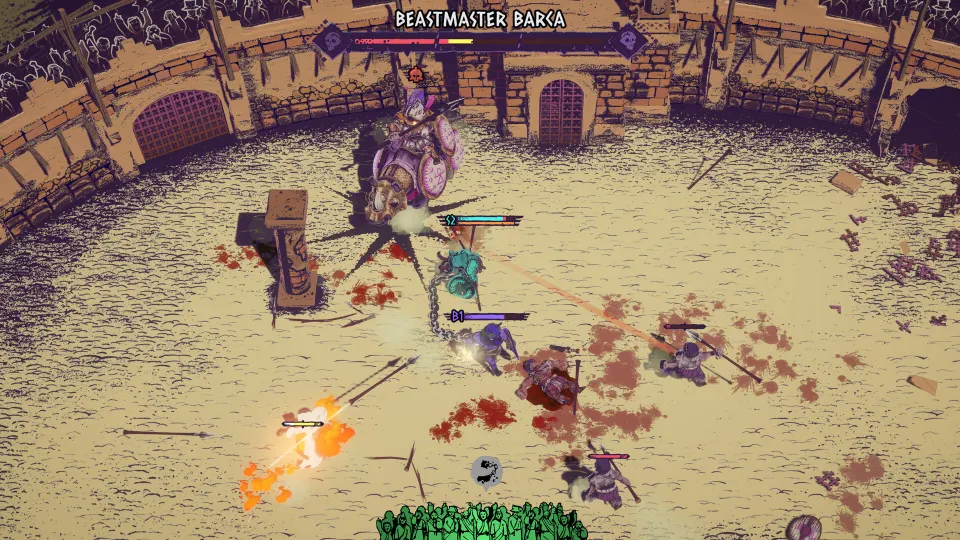
| Final showdown | Fight a boss mounted on a rhino | Completing it unlocks a harder difficulty with modifiers |
Before entering a fight, look at the weapons around the arena and decide who should take what. A group that grabs every weapon immediately can leave someone unarmed or create a dangerous pileup near the starting area.
A balanced team usually works better when players have distinct jobs:
- Keep a durable player close to aggressive enemies.
- Give a cautious player a weapon that can be thrown or used at range.
- Have one teammate watch for hazards and chain tangles.
- Save nearby replacement weapons for teammates whose equipment breaks or is thrown away.
Solo play is slower and more deliberate because you control one gladiator without chain coordination. Co-op is more chaotic, but coordinated players can use the chain itself as an offensive tool.
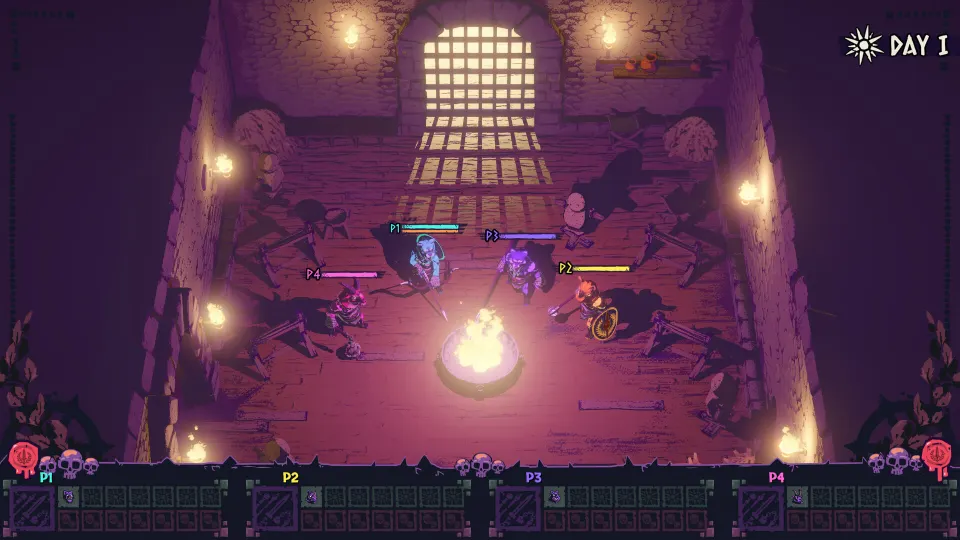
Learn the Core Combat Loop
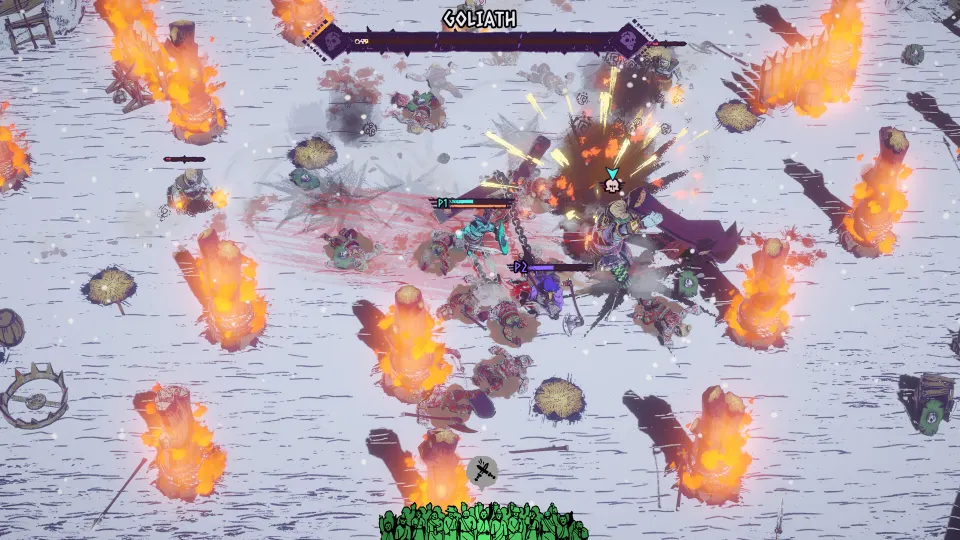
Combat in the demo is physical and messy. You can slash or strike enemies with weapons, throw weapons at distant threats, and use the arena to cause damage. A clean-looking duel can turn into panic when enemies, allies, hazards, and loose weapons all occupy the same space.
The arena is not background decoration. Push enemies toward spikes, snake pits, walls, and other dangerous features whenever possible. Throwing an urn at an enemy can be useful, but throwing an enemy into an urn or a hazard can be even better.
| Combat option | Best use | Main risk |
|---|---|---|
| Melee weapons | Finishing nearby enemies and holding space | Friendly hits and getting surrounded |
| Thrown weapons | Reaching enemies outside melee range | Being left without a weapon |
| Shields | Blocking attacks and reducing pressure | Shields can break during a long fight |
| Arena hazards | Damaging or controlling enemy groups | Allies can be knocked into danger |
| Chain movement | Tripping enemies and forcing positions | Tangling around pillars or pulling allies off course |
Do not throw your only reliable weapon just because an enemy is out of range. First check whether you can close distance safely, collect another weapon, or let a teammate take the shot. Thrown attacks are especially valuable when an enemy is blocked by other combatants or standing beside a hazard.
Enemy control matters more than chasing every target. If a dangerous foe is separated from the pack, pull the group toward it, surround it carefully, and avoid dragging the chain through other threats. When several players attack different directions without communicating, the chain can become a liability.
Friendly damage and accidental contact are part of the challenge. Give teammates room to swing, especially near the center of a crowd. If you are carrying a large weapon, avoid blindly attacking into a knot of allies and enemies. Back off, reposition, then strike from a cleaner angle.
Use Chains, the Crowd, and Teamwork
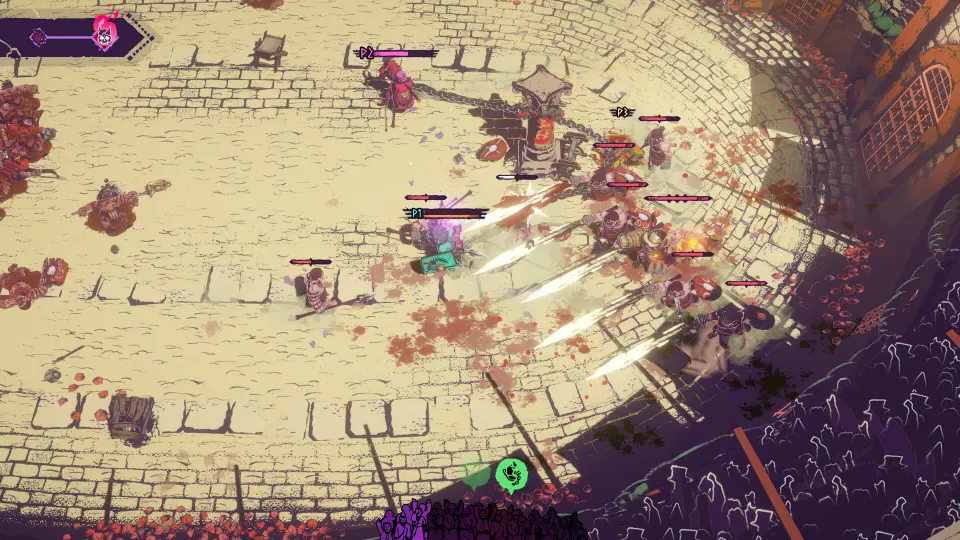
The defining feature of the demo is that players may be chained together in different configurations. The chain can restrict movement, catch around arena objects, or pull teammates into danger. It can also trip enemies and create powerful openings.
Move with a shared plan. Calling out a direction before running across the arena is simple, but it prevents many avoidable tangles. If one player runs clockwise around a pillar while another runs counterclockwise, the group can lose valuable seconds untangling while enemies attack.
| Team situation | Recommended response | Avoid |
|---|---|---|
| Chain catches on a pillar | Stop forcing movement and have everyone rotate the same way | Pulling in opposite directions |
| Enemy is near the chain | Move together to sweep or trip it | Splitting toward separate targets |
| Ally has low health | Clear space and escort them to equipment | Dragging them into the front line |
| Enemy is out of reach | Throw a weapon or reposition as a group | Stretching the chain across hazards |
| Group is surrounded | Choose one exit direction and push through together | Four players fleeing separately |
The crowd judges more than survival. Fast, varied, dramatic combat improves its mood, while repetitive or slow fighting can disappoint it. The crowd can reward your team, so take opportunities to make a spectacle when they do not put the run at unreasonable risk.
Use variety naturally instead of forcing reckless tricks. Mix melee attacks, thrown weapons, blocks, enemy knockbacks, and hazard kills. If you need a safer approach, survival comes first; an impressive crowd meter is not worth losing a teammate before the next day.
Some events may offer a challenge with a reward, such as meeting a condition during a battle. Read the requirement before accepting. A team-wide objective can be worthwhile when everyone understands it, but it can become costly if one player is already injured or the arena setup is unfavorable.
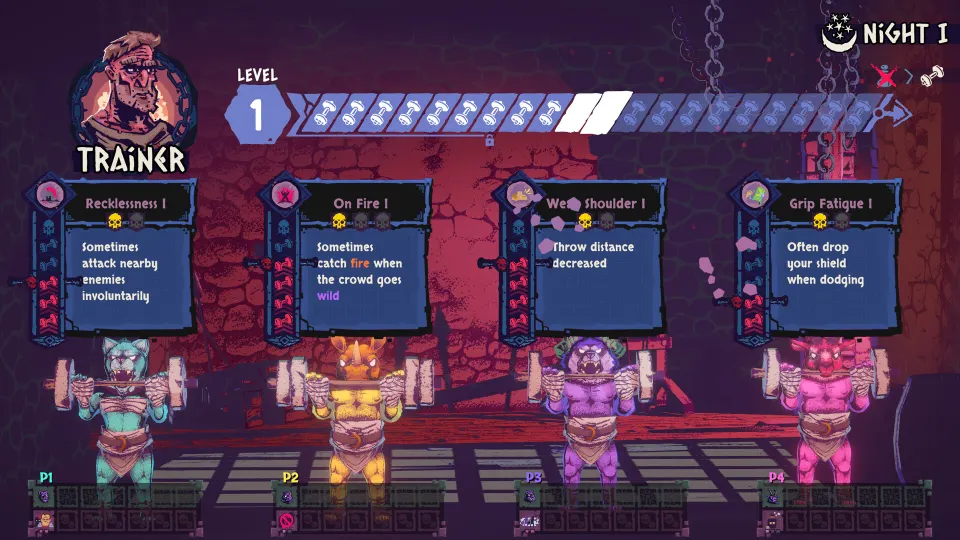
Build Around Wounds, Skills, and Gear
After each battle, the demo asks you to make difficult decisions. Healing potions can restore health, but they can also inflict permanent physical or mental afflictions. These conditions alter how you play, so do not treat healing as a free reset.
An affliction can make movement, aiming, awareness, or other actions harder. Its severity can increase, making a manageable drawback more dangerous later in the run. Sometimes accepting a wound is necessary; other times, staying injured is better than taking a problem that undermines your whole build.
| Between-battle choice | Potential benefit | Tradeoff to consider |
|---|---|---|
| Healing potion | Restores health | Can add a lasting affliction |
| Skill upgrade | Adds combat power or a useful effect | May favor a specific weapon or strategy |
| Equipment purchase | Gives the team defensive or offensive tools | Uses shared money |
| Special offer or challenge | Can create a valuable reward opportunity | May impose a difficult condition |
| Character selection | Changes starting strengths and twists | May require adapting your usual approach |
When picking upgrades, choose effects that fit the group rather than chasing the flashiest individual benefit. A skill that rewards tripping enemies is much stronger if your team deliberately uses chains to trip. An upgrade for thrown weapons is better when someone plans to keep spare weapons nearby.
Money is shared in co-op, so talk before buying. A defensive item that helps every gladiator can be more valuable than a niche weapon for one person. Consider purchases that reduce incoming damage, improve blocking, or provide reliable healing support when the team is struggling.
The demo also includes multiple playable Beasts, including a fifth Beast unlocked through progress. Different characters can begin with distinct advantages, so use repeat attempts to test which starting twist best suits your group. Do not assume a failed run means the team lacks skill; a different character combination or upgrade priority may solve the problem.
FAQ
How long is the Chained Beasts demo?
The demo includes a tutorial and five Carthage arena battles, ending with the rhino-mounted boss. Run length varies based on difficulty, team size, and how long your group spends choosing upgrades and gear.
How to play chained beasts demo in co-op?
Install the demo through Steam, then play with up to four people through local or online co-op. Coordinate movement before battles, because chained teammates can pull each other into hazards, wrap around pillars, or trip enemies together.
Can you play the demo solo?
Yes. The demo supports single-player play. Solo runs are generally more controlled and strategic, while multiplayer runs emphasize shared positioning, chain coordination, and managing accidental chaos.
What should beginners do after the first battle?
Check everyone’s health, read potion drawbacks carefully, and choose upgrades that work with your current weapons and team strategy. Spend shared money deliberately, especially on equipment that improves survival for the entire group.
What happens after beating the demo boss?
Defeating the rhino-mounted boss unlocks a higher difficulty that adds special modifiers. This gives experienced groups a reason to replay the Carthage arena with tougher conditions.