Playing Co-op in the Demo
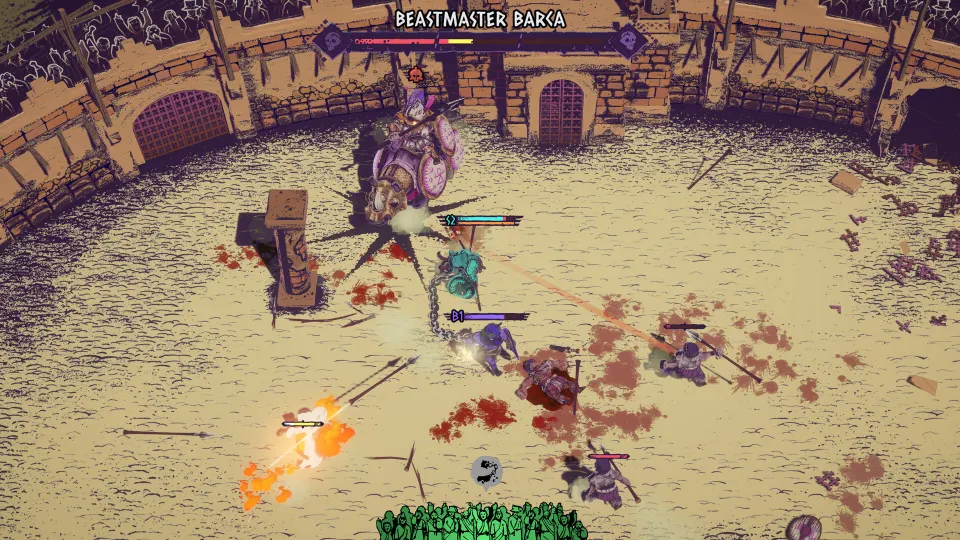
The Chained Beasts demo multiplayer mode matters because the chain is not just a visual gimmick: it turns every fight into a shared positioning problem. A coordinated group can trip enemies, pull each other clear of danger, and turn arena hazards into weapons; an uncoordinated one can become tangled around pillars while enemies close in.
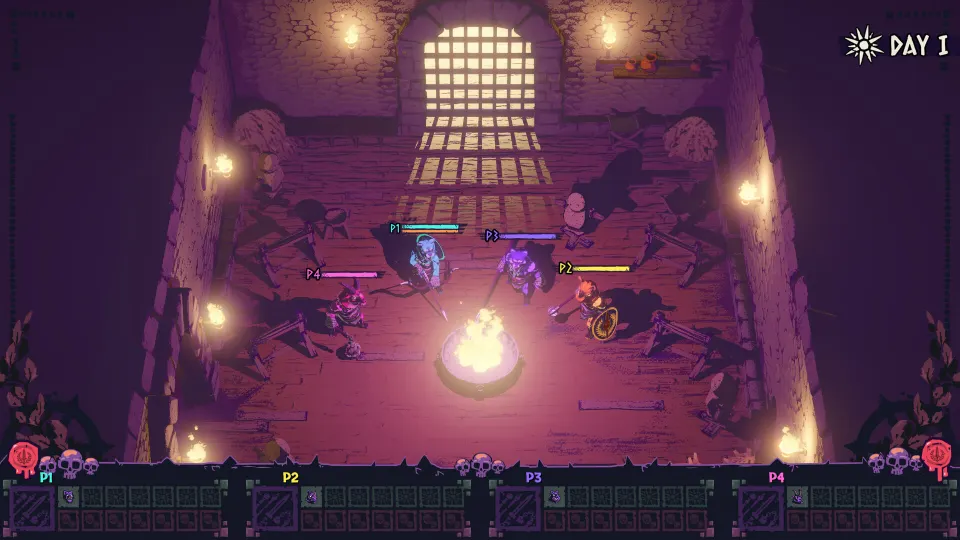
The free demo places one to four players in the Carthage Arena. It supports solo play, online co-op, local shared or split-screen co-op, and Remote Play Together. Co-op is the intended centerpiece, but solo players can still learn the systems at a slower, more deliberate pace.
| Mode | Players | What to expect |
|---|---|---|
| Solo | 1 | A more controlled run with no teammate chain management |
| Online co-op | 2-4 | Coordinate through invites or room connections and manage the shared chain |
| Local co-op | 2-4 | Play together on one screen or split screens; at least one gamepad is required for same-screen co-op |
| Remote Play Together | 2-4 | A Steam option for sharing a local-style session remotely |
Before inviting friends, it is worth completing the tutorial alone. It introduces movement, attacks, blocking, weapon handling, crowd favor, and the rules of the chain without the pressure of a full team trying to move in different directions.
For online groups, make sure everyone has finished the opening tutorial and is using the same game version. If a player joins a lobby but cannot move beyond a connection screen, recreate the room, have the host send a fresh invite, and confirm that each player completed the initial solo setup. The game’s community discussions have included reports of joining issues, so a quick test lobby before a serious run is sensible.
What the Carthage Demo Includes
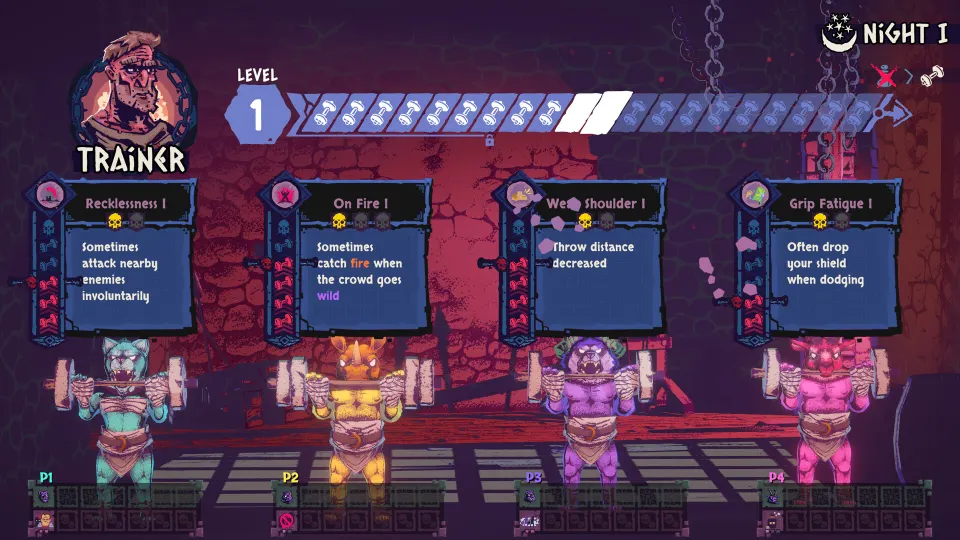
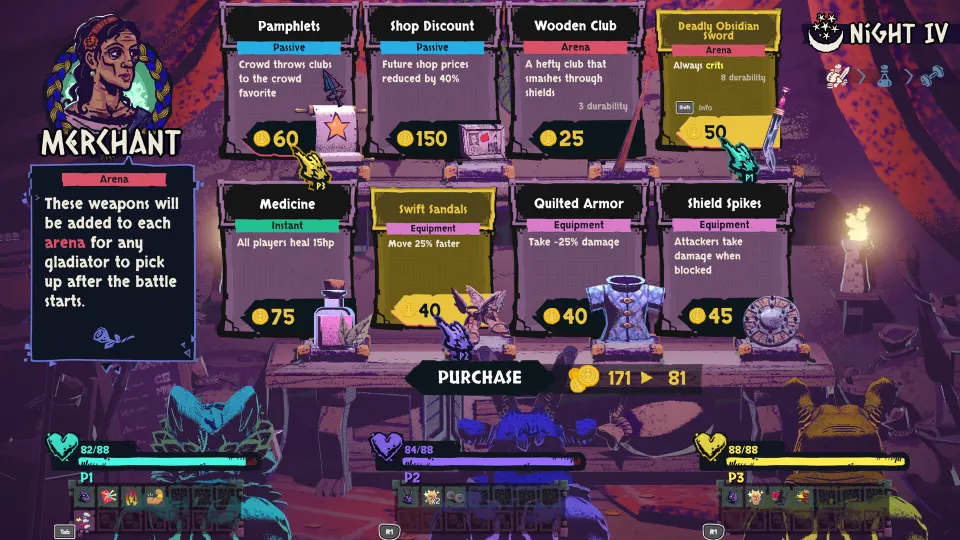
The demo is an extended introduction to the first chapter of Chained Beasts rather than a small one-fight sample. After escaping the prison-camp tutorial, your group faces five days of escalating battles in Carthage and finishes with a boss encounter against a rider mounted on a rhino.
| Demo feature | How it affects a run |
|---|---|
| Prison-camp tutorial | Teaches the foundational combat and survival systems |
| Five arena battles | Creates a compact roguelite run with increasing pressure |
| Upgrade choices | Lets players shape different combat builds each attempt |
| Physical and mental afflictions | Adds lasting drawbacks after injuries or risky healing |
| Rhino-rider boss | Tests whether the team can manage space, damage, and revives |
| Fifth playable Beast | Offers an unlockable character with a distinct starting twist |
| Higher difficulty modifiers | Unlock after defeating the boss for a tougher replay option |
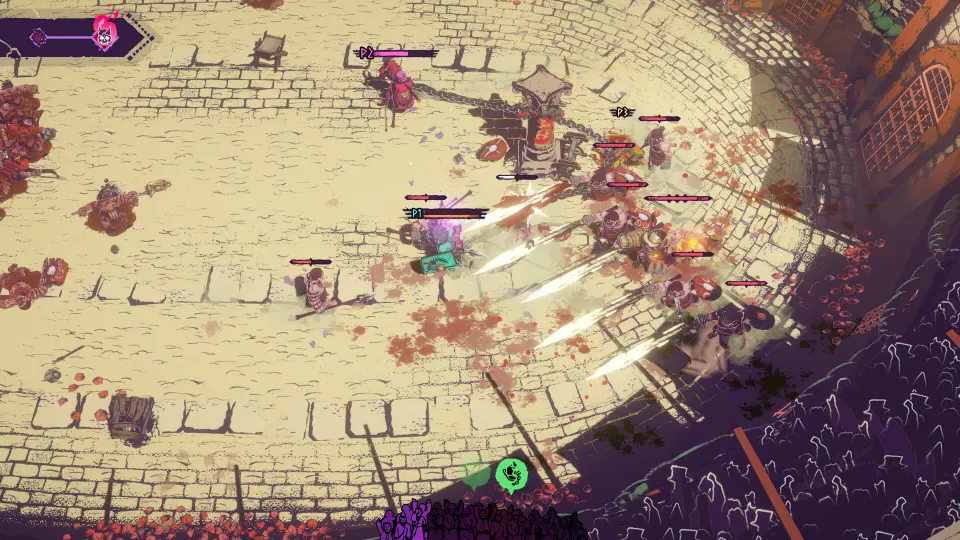
A successful attempt is about more than clearing enemies. The arena crowd watches how you fight. Varied executions, environmental kills, weapon use, and flashy combat can build favor, while a hostile crowd may make an already messy battle worse. Treat crowd favor as a team resource: when the group sees a chance for a stylish finish, create room for the player who can make it happen.
The demo’s roguelite structure also means that a rough early round does not automatically end a run. Players can gain skills, accept contracts, buy gear, and choose upgrades between battles. However, injuries persist, and the strongest immediate recovery may come with the most disruptive consequence.
| Between-battle choice | Potential benefit | Possible cost |
|---|---|---|
| Healing potion | Restores health | Can add an affliction or side effect |
| Training | Improves a character’s capabilities | Pushing too far can create a penalty |
| Upgrade selection | Adds damage, defense, mobility, or synergy | Choices may favor one playstyle over another |
| Equipment purchase | Provides a useful weapon or tool | Uses limited currency |
| Arena contract | Offers an extra reward | Requires meeting a precise combat condition |
This is why teams should communicate their choices. One player taking a risky potion that causes hallucinations, impaired vision, or another unusual effect can change the group’s plan for the next round. Likewise, a contract that requires thrown-weapon kills should be announced before allies accidentally finish every weakened target.
Chain Tactics and Team Survival
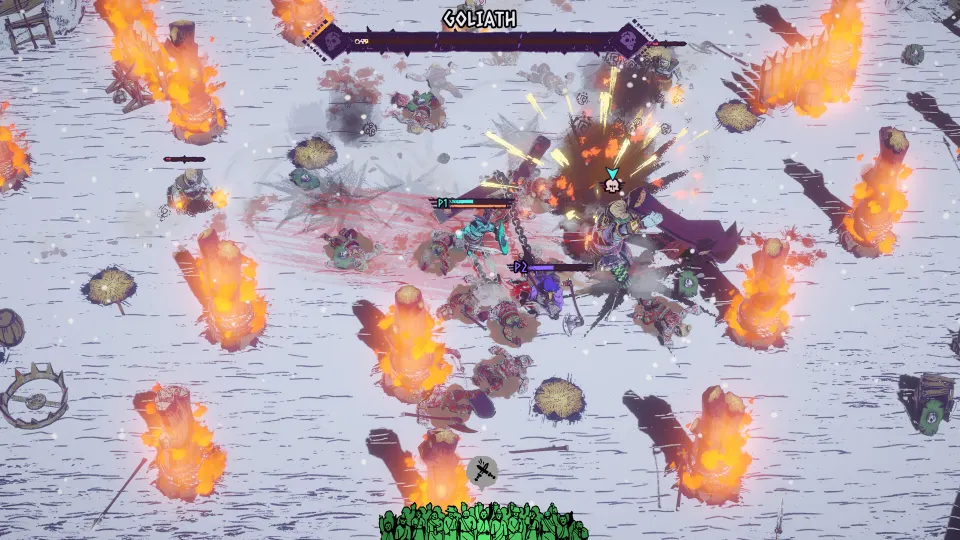
The chain is the defining rule of Chained Beasts demo multiplayer. It limits how far teammates can spread, creates accidental collisions, and makes retreating alone difficult. At the same time, it can knock down or trip enemies when your positioning is deliberate.
The simplest principle is to move with intent. Do not have every player chase a different enemy at opposite corners of the arena. Pick a direction, move around obstacles together, and leave enough distance between players that melee swings do not punish allies.
Use this short routine during busy battles:
- Call a direction before rotating around a pillar or arena hazard.
- Assign one player to draw attention while another looks for a throw, trip, or environmental kill.
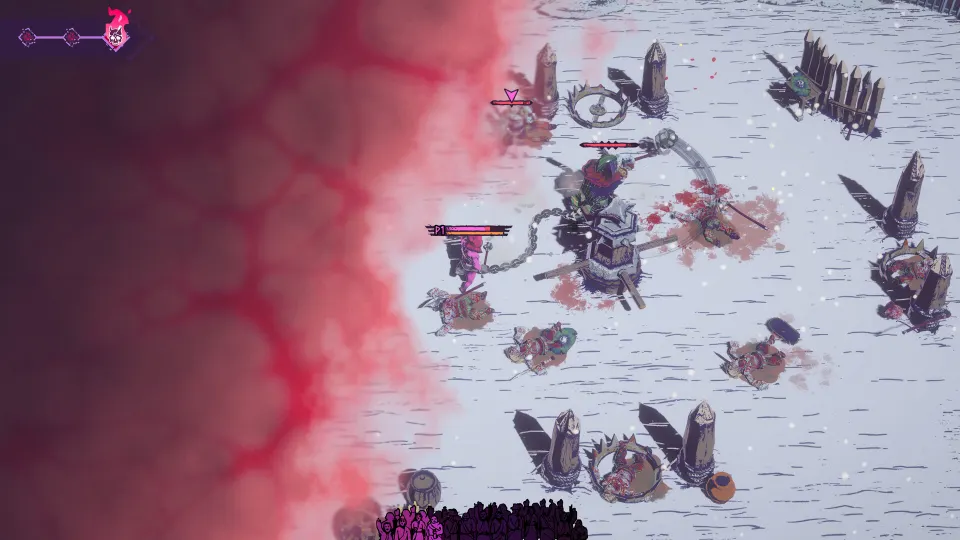
- Keep enemies near spikes, snake pits, walls, and throwable objects when possible.
- Announce low health early, before the chain pulls the team into an unsafe rescue.
- Save room around a downed teammate so reviving them does not trap the entire group.
- Agree when a contract or crowd-favor opportunity takes priority over fast kills.
Weapons change both your role and your spacing needs. A shield helps with close pressure and blocks, bows give ranged coverage but have limited ammunition, and heavy weapons can deliver powerful hits while making movement more cumbersome. Throwing a weapon can solve a distant threat, but it can also leave the player unarmed at the worst moment.
| Situation | Better team response | Common mistake |
|---|---|---|
| Enemy near a hazard | Herd or throw the enemy into it | Chasing with separate targets |
| Chain caught around a pillar | Stop attacking and rotate together | Each player pulling in a different direction |
| Ally is low on health | Create a safe lane and cover them | Dragging them through the enemy pack |
| Ranged enemy outside melee reach | Use a throw or reposition as a group | Stretching the chain until the team loses formation |
| Crowd favor opportunity | Let the prepared player secure it | Interrupting with accidental finishing blows |
Blocking is especially valuable when the arena fills with enemies. It can interrupt attacks and create an opening for teammates, but it is not a substitute for positioning. A group that blocks in place while chained around an obstacle may still be overwhelmed. Use blocks to buy the seconds needed to regroup, rotate, and attack from a more favorable angle.
The rhino-rider boss is a practical test of these habits. Avoid treating it as a damage race. Preserve space, watch where the chain is leading the group, and avoid getting boxed against walls or hazards. One player can bait pressure while teammates strike safely, but everyone must know when to rotate away together.
FAQ
Is Chained Beasts demo multiplayer playable online?
Yes. The demo supports online co-op for up to four players, alongside local co-op and Steam Remote Play Together. Every player should complete the tutorial first, then join through the host’s available Steam invite or room connection.
How many players can join one demo run?
A run supports one to four players. Four-player sessions are the most chaotic because everyone shares the chain constraints, while two players may find it easier to communicate and control spacing.
Can I play the demo by myself?
Yes. Solo play is supported. It is generally more tactical because you are not managing teammate movement, but the game is designed primarily around the unpredictable co-op experience.
What does the demo let players do?
Players can complete the tutorial, survive five Carthage arena battles, choose upgrades, endure injuries and healing side effects, unlock an additional Beast, and fight the rhino-rider boss. Beating that boss unlocks a higher difficulty with special modifiers.
Is the demo permanent?
The developer has said the Carthage demo is scheduled to be taken offline when the full game launches on October 15, 2026. If you want to try the Chained Beasts demo multiplayer experience, play it before that transition.