Start Your Arena Run
Chained Beasts rewards smart positioning more than reckless brawling. You are not simply clearing enemies: you must survive gladiatorial battles, manage wounds, win crowd support, and use the chain as a weapon.
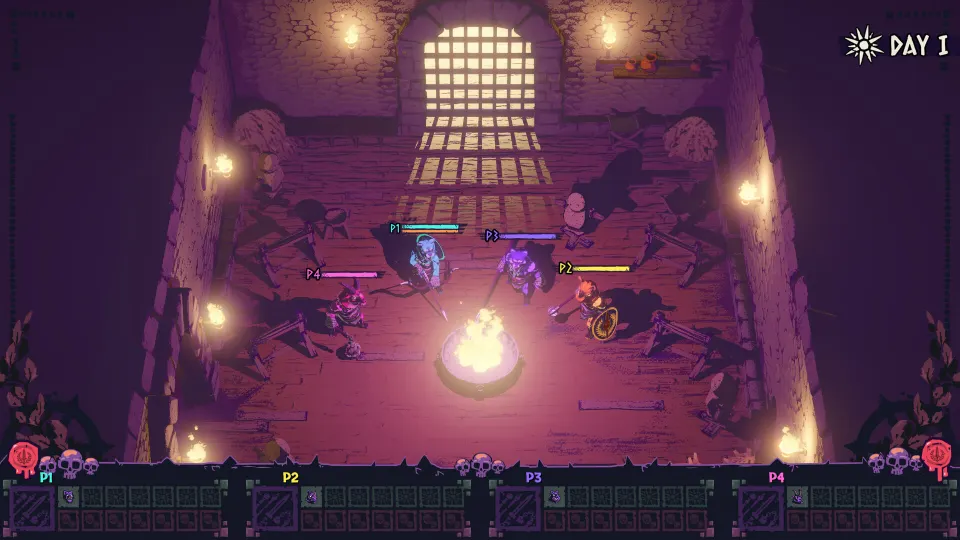
A run can be played alone or with up to four players. Co-op is louder and more chaotic, but good communication turns the chain from a liability into one of your strongest tools. Solo play is more deliberate because you are tethered to a weight rather than teammates.
| Mode | What changes | Best approach |
|---|---|---|
| Solo | You are chained to a heavy anchor | Keep fights controlled and avoid getting trapped |
| Two players | Easier to coordinate movement and trips | Assign one player to lead positioning |
| Three or four players | More damage and more chaos | Call out movement, targets, and hazards |
| Higher difficulty | Tougher enemies and harsher conditions | Prioritize defense, healing, and reliable damage |
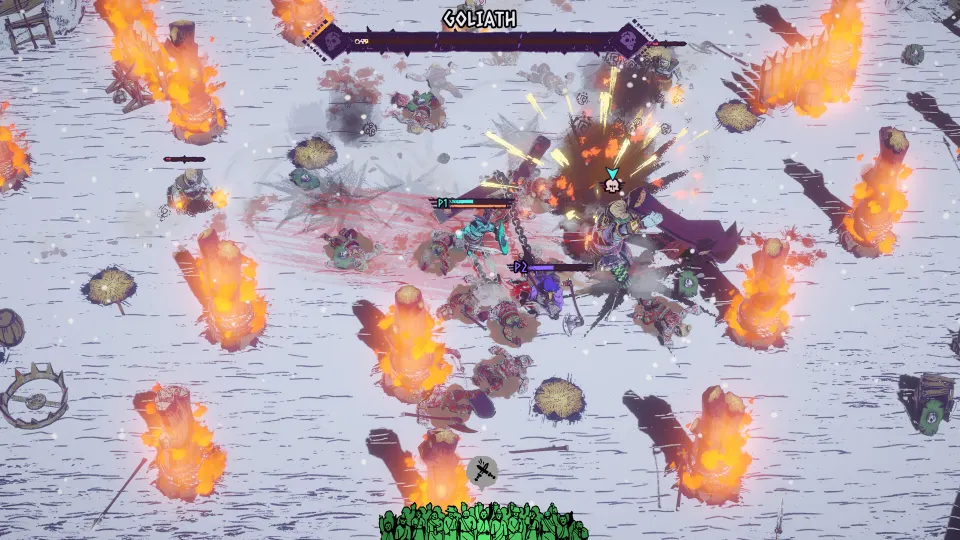
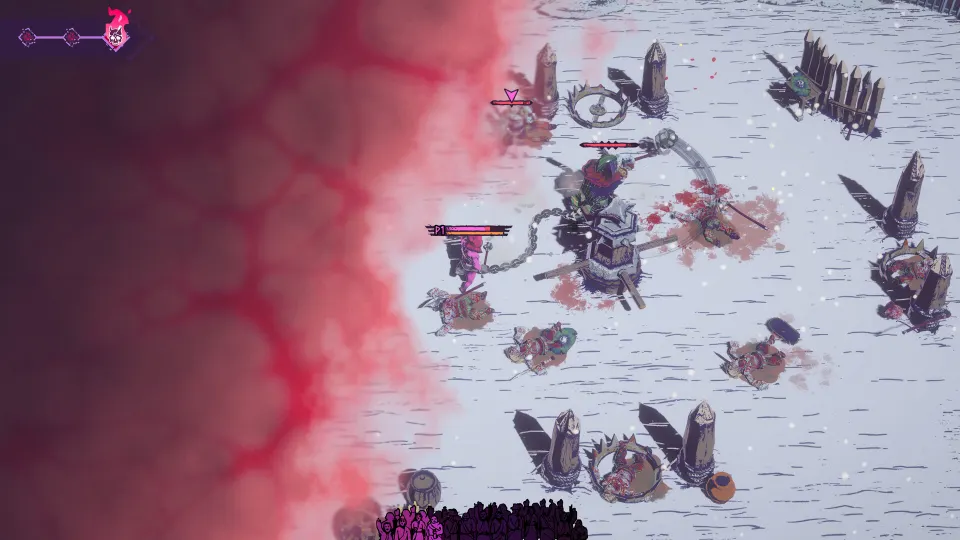
Begin each fight by checking the arena. Identify spike walls, snake pits, pillars, throwable objects, weapons, and open space before committing to an enemy. A bad route can wrap your team around a pillar or pull someone into danger.
Your central goal is to finish battles without letting damage, injuries, and lost equipment snowball into an unwinnable run.
Fight With Weapons, Throws, and the Arena
Combat is top-down, close-range, and demanding. Basic attacks are useful, but survival depends on mixing attacks, charged moves, blocks, throws, and environmental kills.
Weapons can be thrown to hit enemies at range. This is powerful against enemies outside your reach, especially when the chain limits movement, but do not throw away your only safe weapon without a plan to recover or replace it.
| Combat option | Use it for | Main risk |
|---|---|---|
| Basic attacks | Finishing weakened enemies and conserving space | Staying too close for too long |
| Charged attacks | Heavy damage or stronger openings | Can leave you exposed |
| Blocking | Stopping attacks and creating stun opportunities | Shields can break |
| Weapon throws | Reaching distant targets or completing objectives | Losing your weapon |
| Arena hazards | Fast damage and crowd-pleasing kills | Being pushed into the same hazard |
| Grabbing and throwing foes | Repositioning enemies into danger | Getting surrounded while carrying |
A reliable early-fight routine is:
- Let enemies approach instead of chasing every target.
- Block predictable attacks when space is tight.
- Isolate one enemy from the group.
- Trip, stun, or throw that enemy into a hazard.
- Execute or finish weakened foes before new enemies crowd you.
- Reposition before stamina or room runs out.
Enemies can hurt one another, so do not always force an attack. If several foes are attacking through a narrow lane, backing away may make their own swings work in your favor.
Treat stamina as a defensive resource. Emptying it while surrounded can leave you unable to move, attack, or respond when a dangerous enemy closes in.
Make the Chain Work for You
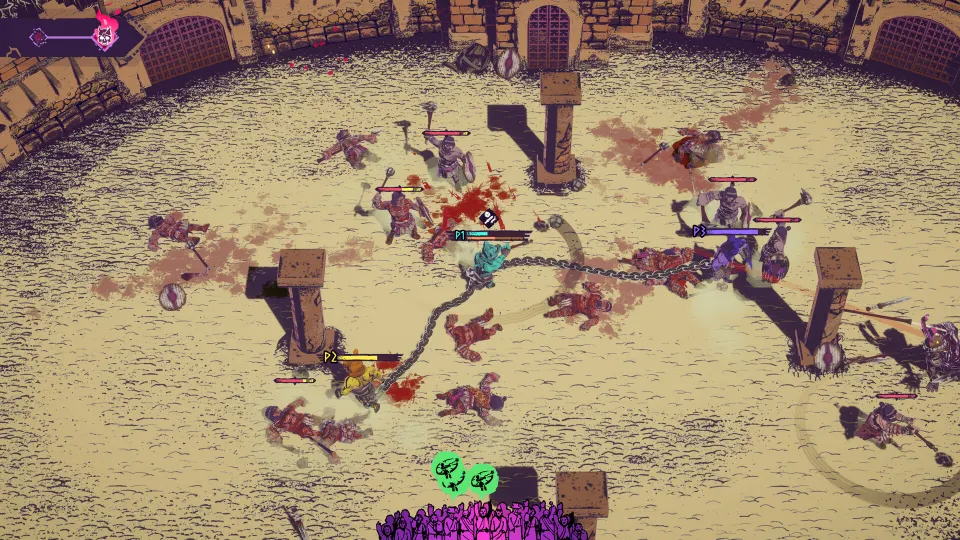
The chain is the defining mechanic of Chained Beasts. In co-op, every player’s movement affects the group, which means teammates can accidentally block attacks, pull one another off course, or become tangled around arena objects.
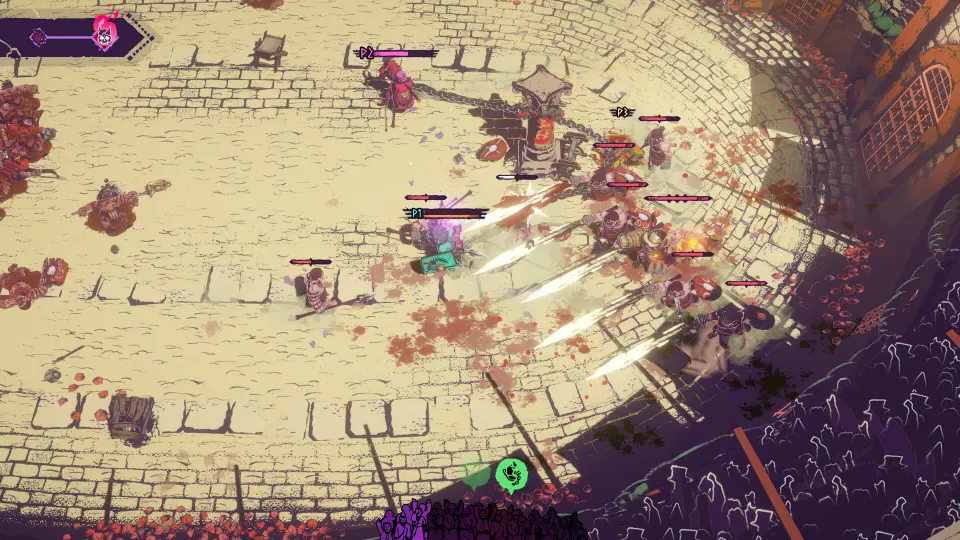
The answer is not to spread out. Move with intention and use the tether to sweep through enemies. When enemies cross the chain, they can be tripped and knocked down, creating a safe opening for damage or an execution.
| Chain situation | What to do | What to avoid |
|---|---|---|
| Enemies are between teammates | Circle in the same direction to sweep the chain | Running directly away from each other |
| A teammate is surrounded | Pull the group toward open ground | Attacking from conflicting angles |
| The chain catches on a pillar | Stop pushing and retrace the route together | Panicking and pulling in opposite directions |
| A foe is knocked down | Focus damage or use an execution | Splitting the team across the arena |
| You need a ranged kill | Move the group into a clear line first | Throwing through teammates or terrain |
Before a wave starts, decide who leads movement. The leader does not need to deal the most damage; they simply choose the safer route through the arena. Other players should avoid suddenly sprinting toward separate objectives.
A useful co-op formation is a loose arc rather than a straight line. It gives the chain room to catch enemies while keeping players close enough to help each other. If someone needs a weapon or pickup, move as a group instead of leaving them at maximum chain distance.
Friendly proximity also makes careless attacks dangerous. When teammates are bunched together, choose targets carefully and avoid throwing weapons through the group.
Build Around Wounds, Crowd Favor, and Rewards
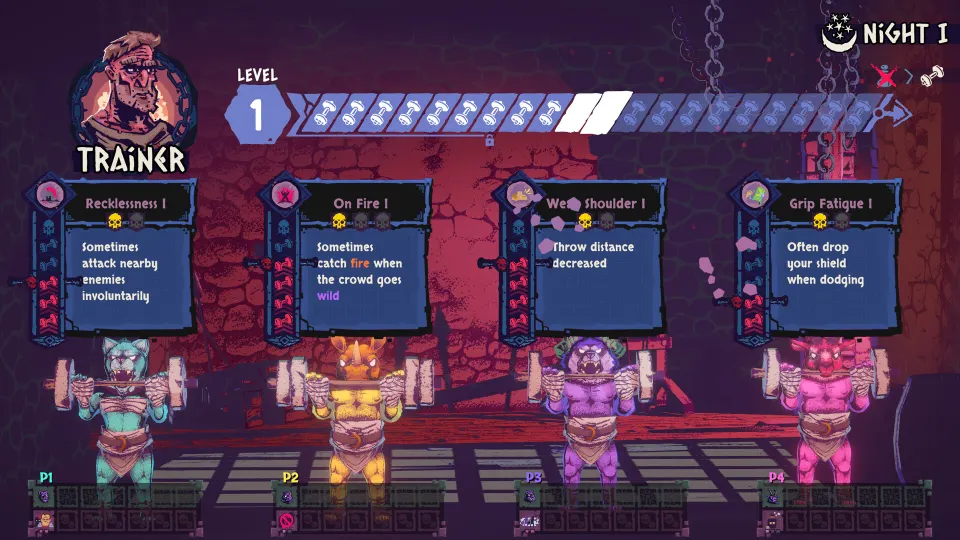
Each arena day can leave your gladiator with physical or mental afflictions. A limp, impaired vision, hallucinations, or other drawbacks can change how you move and fight. Healing options may remove health problems, but they can introduce unpleasant side effects.
Do not choose recovery blindly. Consider whether the new affliction will undermine your current build or make the next battle harder than fighting while injured.
| Between-battle choice | Potential benefit | Decision tip |
|---|---|---|
| Potion or treatment | Restores health | Read the side effect before accepting |
| Training | Can improve your character | Stop before overtraining creates a penalty |
| Perk selection | Adds a combat advantage | Pick effects that support your current weapons |
| Contract or challenge | Offers money or rewards | Accept only if you can control the required kill type |
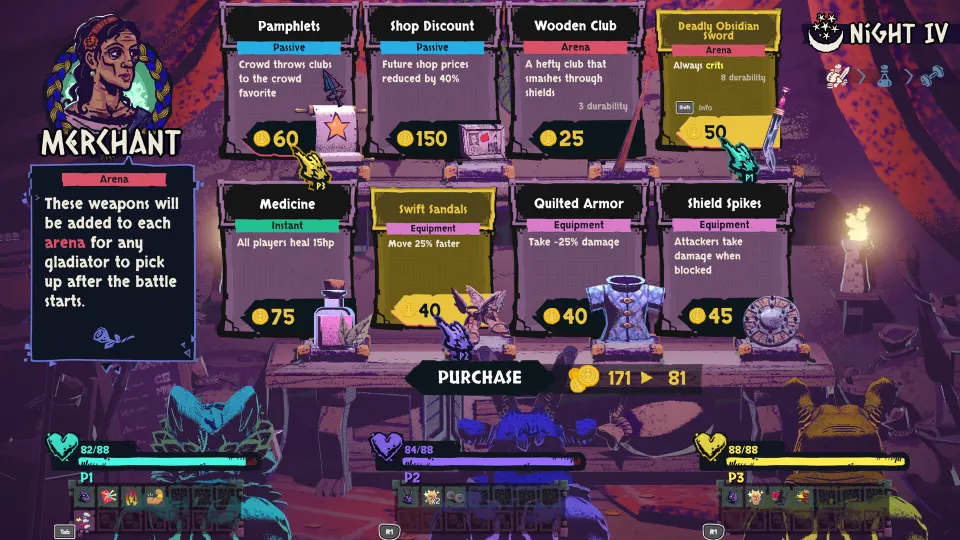
| Shop purchase | Improves weapons or protection | Keep funds for upgrades that solve a real weakness |
Crowd favor matters because entertaining the audience can provide valuable support. Use varied finishers, environmental kills, weapon types, and dramatic takedowns rather than relying on one repetitive tactic. An execution after a trip or a kill into spikes is often better for both survival and spectacle than a slow trade of basic attacks.
Perks should reinforce your playstyle. If your team trips enemies frequently, choose benefits that reward knockdowns, vigor, or follow-up damage. If you throw weapons often, look for effects that make embedded weapons or ranged pressure more valuable.
Contracts can be lucrative, but they also force mistakes if accepted too early. For example, a throw-kill objective is easier when you first soften enemies with normal attacks, then finish the exact number needed using thrown weapons. Completing it carelessly can waste valuable throws or kill the wrong target.
Bosses and Long-Run Survival
Bosses are arena champions with major advantages, so arrive prepared. The full journey spans arena chapters beginning in Carthage and continuing through harsher locations, culminating in Rome. A boss is not just a damage check: it tests whether your group can keep space, maintain equipment, and control the chain under pressure.
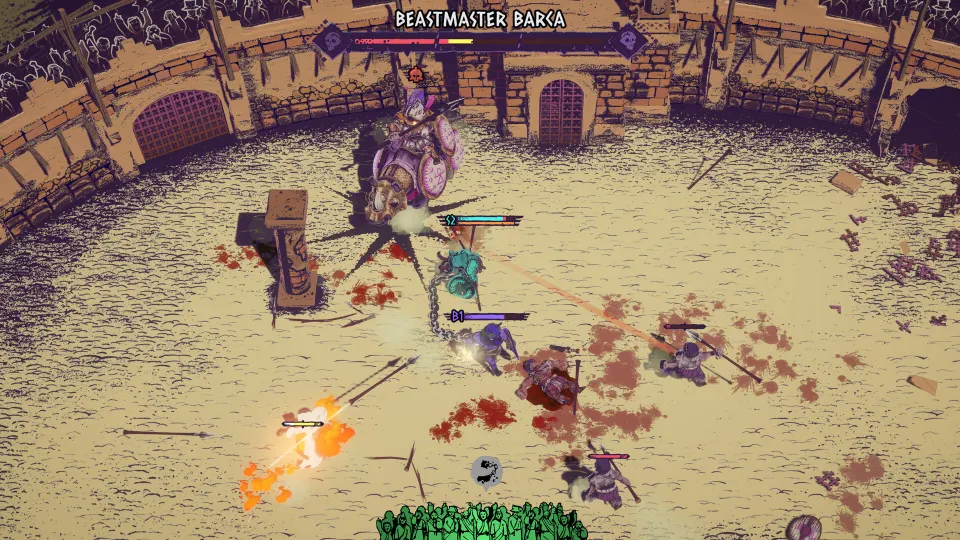
Against a boss, focus on survival first. Learn the attack timing, block when possible, and use hazards only when you can do so safely. Do not let every player rush the boss from a different angle; that usually turns the chain into a trap.
| Problem during a boss fight | Safer response |
|---|---|
| Team is tangled | Retreat together to clear ground before re-engaging |
| Shield breaks | Replace it when there is a safe opening |
| Boss has adds | Clear nearby threats before they collapse your space |
| Players are low on health | Avoid greed; use controlled attacks and blocks |
| Boss is out of range | Reposition together, then use throws selectively |
Save strong equipment for situations where it matters. A powerful weapon is less useful if you lose it in an unreachable corner or throw it at a target that is already about to fall.
For long runs, consistency beats flashy choices. Buy gear that covers your weaknesses, choose perks that work every battle, and avoid afflictions that ruin your ability to navigate the arena. The best run is the one that reaches the next fight with enough health, equipment, and coordination to adapt.
FAQ
How do you play Chained Beasts solo?
Solo play chains your gladiator to a heavy weight instead of other players. Play patiently, keep enemies in front of you, use open arena space, and take advantage of throws and hazards without overextending.
How to play Chained Beasts with friends?
Move as a coordinated group, appoint someone to guide positioning, and use the shared chain to trip enemies. Avoid pulling in opposite directions, getting caught on pillars, or chasing separate targets.
What should beginners prioritize?
Prioritize blocking, stamina management, weapon control, and safe environmental kills. Learn to trip enemies with the chain before relying on risky charged attacks or throws.
Are injuries worth healing?
Often, but always compare the healing gained against the new side effect. A small injury may be easier to manage than an affliction that disrupts vision, movement, or combat awareness.
How do you win crowd favor?
Use varied, dramatic takedowns: executions, weapon kills, throws, trips, and arena hazards. Mixing methods is more useful than repeating the same basic attack.